Vice President JD Vance cited several polls on Wednesday that said the main reason why Republicans lost so badly during the midterms was President Donald Trump’s decision to go to war with Iran, an assessment that the commander-in-chief largely agreed with.
That claim spurred reports that Trump was going to scapegoat Secretary of War Pete Hegseth over the losses, essentially pinning the blame on the former Fox News star even though he, as president, ultimately decided to attack the Iranians over their refusal to give up pursuit of nuclear weapons.
But on Wednesday, Republicans publicly backed Hegseth as they confronted the fallout from their sweeping midterm election losses.
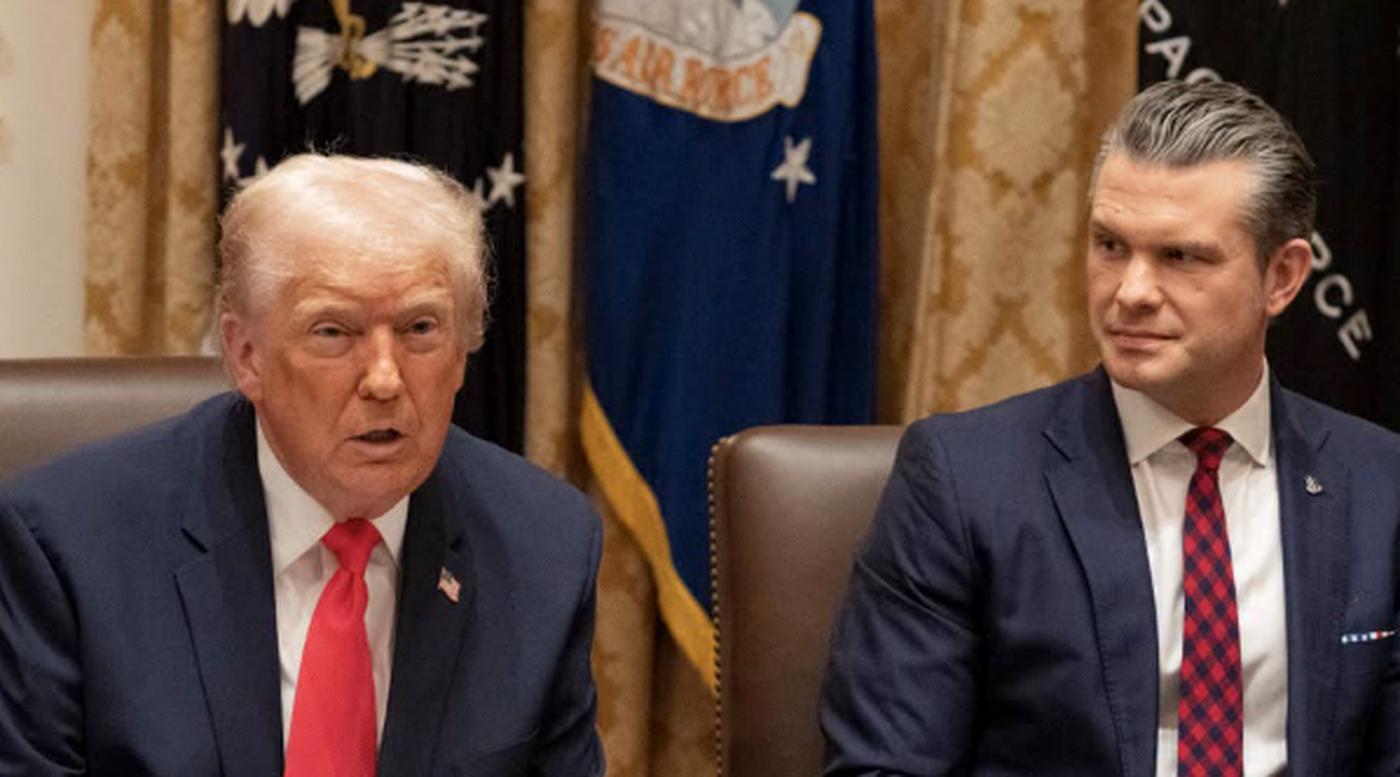
Asked directly whether he was considering replacing Hegseth, Trump rejected the suggestion and offered a clear vote of confidence in his Pentagon chief.
“No, I think he’s doing a very good job,” Trump told reporters Wednesday.
Trump’s declaration came amid reports that he has privately asked advisers whether Hegseth should remain defense secretary following Tuesday’s Republican defeats.
CBS News reported that Trump had consulted multiple advisers about Hegseth’s future, although no decision to remove him had been made.
The discussions come as Republicans debate how much responsibility the eight-month Iran war deserves for Democrats capturing both chambers of Congress.
Trump acknowledged Wednesday that the conflict contributed to the Republican losses, particularly because of its effect on gasoline prices.
Vice President JD Vance offered an even more direct assessment, declaring Wednesday that “The reason we lost is the war.”
Trump nevertheless strongly defended the decision to confront Iran and said he would make the same decision again.
“The Iran thing we had to do, and we continue to do it,” Trump said Wednesday.
The political fallout has inevitably placed attention on Hegseth because of his prominent role advocating the administration’s military strategy.
Trump previously described Hegseth as an early supporter of military action to prevent Iran from obtaining a nuclear weapon.
One Trump adviser told Reuters that Hegseth “could be on the chopping block” as Republicans search for answers following Tuesday’s losses.
The White House, however, referred questions about Hegseth’s future to Trump’s public statement supporting the defense secretary.
The Pentagon similarly pushed back against suggestions that Hegseth could depart.
War Department officials said Hegseth remains “100 percent committed” to leading the Pentagon through the remainder of Trump’s presidency.
Chief Pentagon spokesman Sean Parnell said Hegseth would continue implementing Trump’s agenda despite criticism from Democrats and some Republicans.
“Secretary Hegseth will not back down or be deterred by politicians seeking to score partisan points,” Parnell said.
Hegseth could soon face significantly greater congressional scrutiny when Democrats assume control of the House and Senate in January.
Democrats have promised investigations examining his management of the Pentagon, handling of the Iran war and removal of senior military officers.
Other potential areas include administration policy toward Ukraine and American military strikes against suspected drug-trafficking vessels in Latin American waters.
Hegseth is also facing pressure from Republicans.
Rep. Thomas Massie of Kentucky previously introduced eight articles of impeachment against Hegseth concerning the administration’s military actions against Iran.
Massie accused Hegseth of launching hostilities without congressional authorization, allegations the Pentagon disputes.
Republican Sen. Thom Tillis of North Carolina also questioned Hegseth’s effectiveness in dealing with Congress as Tuesday’s election results arrived.
Tillis said Hegseth has “a reckoning” coming while questioning whether he remains the best official to advance Trump’s defense priorities on Capitol Hill.
The relationship could become particularly important as the administration seeks congressional support for a proposed $1.5 trillion defense spending package.
Democratic control of Congress will make that task considerably more difficult while simultaneously exposing Hegseth to committee investigations and subpoenas.
The situation has drawn comparisons with President George W. Bush’s response to Republicans losing Congress during the Iraq war in 2006.
Bush announced Defense Secretary Donald Rumsfeld’s departure the morning after that election, replacing him with Robert Gates.
But Trump indicated Wednesday that he has no immediate intention of following that precedent with Hegseth.