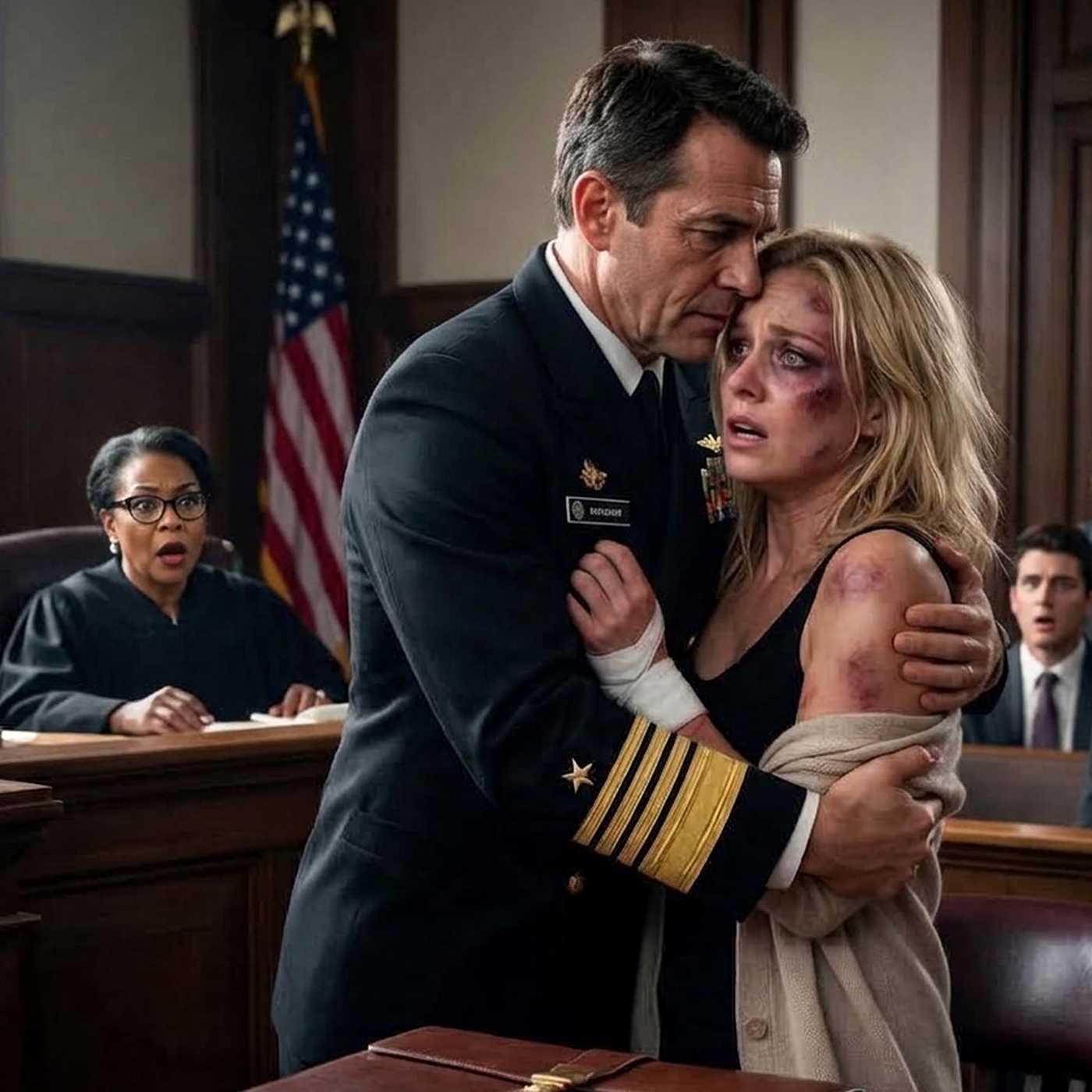
Thirty-one steps from the gallery rail to the witness stand.
I counted them because I count everything. It’s a habit you pick up in places where the distance between a door and a vehicle can matter more than anything anyone says to you.
Nobody in Courtroom 5B of the federal courthouse in Richmond, Virginia, made a sound while I walked them.
I could feel the room behind me. A hundred and forty people. Reporters with their pens stopped. Emma’s donors in the back rows in their church clothes. My parents in the second row.
My mother’s breathing. Short. Ragged. Like somebody had knocked the wind out of her.
My father’s silence. That was worse.
I stopped at the witness stand.
The clerk held out a Bible.
– Raise your right hand. Do you swear or affirm that the testimony you’re about to give is the truth, the whole truth, and nothing but the truth?
– I do.
– Please be seated. State your full name for the record and spell your last name.
I sat.
The chair was hard oak. The microphone was on a flexible neck. The Virginia state seal was carved into the paneling above the judge’s head.
– Jessica Anne Carter. C-A-R-T-E-R.
– And your occupation?
– I’m a brigadier general in the United States Army. I currently serve as Director of Counterintelligence Operations at the Defense Intelligence Agency.
The reporters’ pens started moving again. All at once. Like rain.
At the defense table, Emma sat with her hands flat on a yellow legal pad.
Forty-four years old. Three years older than me. Honey-blonde hair in a smooth chignon. A navy suit with a white silk blouse. A small gold cross at her throat that she’d worn at every hearing for eight months. Her photograph had been on the front page of the Richmond Times-Dispatch nine times since her indictment, and in every one of them she looked like a woman who had been wronged by the world.
She wasn’t looking like that now.
She was staring at the single silver star on each of my shoulder boards.
Her lips were slightly parted. Her pen had rolled off the legal pad onto the table, and she hadn’t noticed.
Beside her, her lead attorney was already on his feet.
– Your Honor. Preston Lockwood for the defense. The defense renews its objection to this witness in the strongest possible terms.
United States District Judge Constance Leland looked at him over her reading glasses. Sixty-three. Former federal prosecutor. She had presided over two espionage trials and a mob case. She did not look impressed.
– Mr. Lockwood. I ruled on your motion yesterday afternoon. At some length.
– Yes, Your Honor. But new information has come to light this morning.
– What new information?
– At 7:02 this morning, the defense filed a formal complaint with the Department of Defense Inspector General alleging that General Carter misused classified government systems and resources to conduct a personal investigation into her own sister. The defense believes the witness’s testimony is fruit of that misconduct and should be excluded in its entirety.
The courtroom murmured.
Judge Leland set her pen down.
– You filed an IG complaint against the government’s witness at seven o’clock this morning.
– Yes, Your Honor.
– Two and a half hours before she was scheduled to testify.
– The defense only recently became aware of—
– Sit down, Mr. Lockwood.
– Your Honor—
– The court has reviewed the government’s proffer regarding this witness in camera. Every document General Carter relied on was obtained by grand jury subpoena or produced by financial institutions in response to lawful process. She assisted the government as a volunteer, on her own time, using public and subpoenaed records. If you have an IG complaint, the IG can deal with it. It is not a basis to exclude her testimony. Overruled. Sit down.
Lockwood sat down.
He didn’t look defeated. He looked like a man who’d expected exactly that answer and needed it on the record anyway.
He was fifty-five. Silver hair. A navy suit that cost more than my first car. A senior partner at a white-collar defense firm on Pennsylvania Avenue in Washington. The kind of firm that bills twelve hundred dollars an hour and represents cabinet secretaries.
Emma’s charity paid its executive director a hundred and forty thousand dollars a year.
My parents had taken a second mortgage on their house in Mechanicsville to help pay her legal fees. Two hundred thousand dollars. My mother had told my aunt, and my aunt had told me, in a voicemail I listened to in a hotel room in Stuttgart.
Two hundred thousand dollars buys about a hundred and sixty hours of Preston Lockwood.
He had been on this case for eleven months.
Somebody else was paying for Preston Lockwood.
I had been wondering who for a long time.
– Ms. Kim, Judge Leland said. Your witness.
Assistant United States Attorney Rachel Kim rose from the prosecution table. Thirty-nine. Black suit. Black hair in a low ponytail. She’d spent six years in the Justice Department’s fraud section before coming home to Richmond. She walked to the lectern with a single folder.
– General Carter. Good morning.
– Good morning.
– How long have you served in the United States Army?
– Twenty-three years.
In the second row, my father made a sound. Low. Like a man who’d stepped on something sharp in the dark.
– When did you enlist?
– June 2003. I was eighteen.
– Where did you attend basic combat training?
– Fort Jackson, South Carolina.
– Did you complete it?
– Yes.
– In how many weeks?
– Ten.
– Were there any disciplinary issues? Any recycling? Any separation?
– No, ma’am. I was named honor graduate of my company.
Somebody in the gallery laughed. Not unkindly. Just the sound people make when the world tilts.
At the defense table, Emma closed her eyes.
– What happened after basic training?
– I was sent to the Defense Language Institute in Monterey, California, for Arabic. Sixty-three weeks. After that, I was assigned as a signals intelligence linguist. In 2006, I was selected for Officer Candidate School. I was commissioned as a second lieutenant in Military Intelligence in 2007.
– And after that?
– I served in Iraq, Afghanistan, and a number of other locations over the next seventeen years. Most of my assignments were in human intelligence and counterintelligence. Most of them were classified.
– Are you able to describe them to this jury?
– No, ma’am. Only in general terms.
– In general terms, what does a counterintelligence officer do?
I looked at the jury.
Twelve people. Six women and six men. A retired schoolteacher. A mechanic. A young woman with a nose ring who worked at a hospital. A man in his seventies in a sport coat with a Korean War veteran pin on the lapel.
He was looking at me very steadily.
– We find people who are stealing secrets, I said. And we figure out who they’re giving them to. Most of the time, that means following money. People who betray their country almost always get paid. And money leaves footprints. You just have to know where to look.
– Is that how you came to be involved in this case?
– Yes, ma’am.
– Explain.
I didn’t look at Emma.
– Eighteen months ago, I received a phone call from my mother. It was the first time she’d called me in almost two years.
In the second row, my mother put her hand over her mouth.
– She told me my sister had been indicted. She told me it was a terrible mistake. She told me the government was persecuting Emma because she was a woman and because she was successful. She asked if I knew anyone who could help. She said I was the only one in the family who knew anything about the government. Even if I’d washed out.
Nobody in the courtroom made a sound.
– I told her I’d look into it.
– Did you?
– Yes. I asked the U.S. Attorney’s Office if they would accept assistance from a financial intelligence analyst, on my own time, unpaid, with no access to any government system. They agreed. I recused myself from anything that touched my official duties. I told my chain of command. I signed an ethics agreement. I have a copy.
– What did you find?
– I found that my mother was wrong.
I let that sit for a moment.
– It wasn’t a mistake, I said. And it wasn’t just embezzlement.
Rachel Kim turned to the jury box.
– Your Honor, the government would like to publish Government Exhibit 114.
– Go ahead.
The screens around the courtroom lit up. A chart. Clean lines. Boxes and arrows. I’d built it in a hotel room in Stuttgart at two in the morning over six weeks, from eleven thousand pages of bank records.
– General Carter. Can you walk the jury through this?
– Yes.
I pointed with a laser the clerk handed me.
– This box is the Bright Harbor Children’s Fund. Emma’s charity. Founded in 2012. It runs after-school programs, summer camps, and a mentoring program for children in foster care in Richmond, Petersburg, and Hampton Roads. Between 2019 and 2025, it received forty-one million dollars in donations.
The red dot moved.
– The government’s charges focus on fourteen point two million dollars that left the charity during those six years without legitimate purpose. Of that, approximately two point three million went to the defendant’s personal benefit. A house in Windsor Farms. A lake house at Smith Mountain. Two vehicles. Tuition at Collegiate School for her daughter. Jewelry. Travel.
At the defense table, Emma’s face had gone very still.
– And the rest? Rachel Kim asked.
– The rest is why I’m here.
The red dot moved to the right side of the chart.
– Eleven point nine million dollars went from Bright Harbor to two companies. Tidewater Grant Services LLC, registered in Delaware. And KPA LLC, registered in Wyoming. Both were paid as consultants. Grant writing. Program evaluation. Donor development. Neither company had an office. Neither had employees. Neither ever produced a single document for Bright Harbor that anyone has been able to find.
– Where did the money go after that?
– Tidewater sent most of its money to accounts in Malta. KPA sent most of its money to a trust in Nevada. The trust is still under investigation. I’m not able to discuss it further.
– Is there anything else about the pattern that caught your attention?
– Yes.
The red dot moved to the left side of the chart. To a box I’d colored gray.
– Between 2019 and 2025, Bright Harbor received nine point six million dollars in donations from a single foreign entity. The Alder Foundation, registered in Liechtenstein. The Alder Foundation describes itself as a philanthropy supporting children’s welfare worldwide. It has no website. It has no staff. Its directors are nominees provided by a law firm in Vaduz.
– Why is that significant?
– Because every time the Alder Foundation sent money into Bright Harbor, within seventy-two hours, almost exactly the same amount left Bright Harbor for Tidewater or KPA.
I clicked. The next slide. Two columns of dates and dollar amounts side by side.
– Thirty-eight times in six years. Money in. Money out. Seventy-two hours. Give or take a few thousand dollars.
– What does that pattern suggest to you?
Lockwood was on his feet.
– Objection. Calls for speculation. The witness is not qualified as an expert in—
– The witness was qualified as an expert in forensic financial analysis yesterday, Mr. Lockwood, Judge Leland said. Over your objection. Overruled.
– It suggests, I said, that Bright Harbor wasn’t just being robbed. It was being used. As a pipe. Somebody overseas was sending money into a respected American children’s charity where no one would look at it twice, and somebody else in this country was taking it out the other side as consulting fees.
– For what purpose?
– I don’t know yet.
– No further questions, Your Honor.
Rachel Kim sat down.
Judge Leland looked at the clock over the door.
10:52 a.m.
– Cross-examination, Mr. Lockwood.
Preston Lockwood stood up and buttoned his jacket.
He didn’t walk to the lectern. He walked to the rail of the jury box and stood beside it, where the jury could see him and me at the same time.
– Good morning, General.
– Good morning.
– May I call you General? Or would you prefer Jess? That’s what your family calls you, isn’t it?
– General is fine.
– General. How long has it been since you’ve spoken to your sister?
– About six years.
– Six years. And before that?
– Occasionally. Holidays.
– How many holidays in the last twenty-three years have you actually spent with your family?
– I don’t know. Not many.
– Not many. Would you say three?
– Maybe four.
– Four holidays in twenty-three years. Your sister’s wedding?
– I was deployed.
– Your niece’s baptism?
– I was deployed.
– Your father’s triple bypass in 2017?
I didn’t answer right away.
My father was looking at me from the second row.
– I was overseas, I said.
– Deployed.
– Overseas.
– And during all of that time, all of those missed holidays and weddings and surgeries, you allowed your parents to believe that you had failed basic training. Correct?
– I didn’t correct what they believed.
– For twenty-three years.
– Yes.
– You let your mother cry about it. Your aunt told us she did. She said your mother cried on your birthday every year because her younger daughter had never found her place in the world.
In the second row, my mother put her face in her hands.
– I didn’t know that, I said.
– You didn’t know because you never asked.
– No.
– General, it’s fair to say you’re a professional deceiver, isn’t it?
– No.
– You’ve spent twenty-three years lying to your own family. By your own testimony, your career consists of assignments you can’t describe in places you can’t name doing things you can’t discuss. You’re trained to tell people things that aren’t true. You’re trained to pretend to be someone you’re not. You’re trained to manipulate people into telling you things they don’t want to tell you. Isn’t that right?
– I’m trained to keep secrets, Mr. Lockwood. That’s different.
– Is it?
– Yes.
– How?
– A liar tells you something false to get something from you. I kept something true to protect people who aren’t in this room.
He smiled.
– That’s a very good line. Did they teach you that at the Defense Language Institute?
– Objection, Rachel Kim said.
– Withdrawn.
He walked back to the defense table. He picked up a thin binder.
– General. You testified that you found this pattern of donations from the Alder Foundation and payments to two consultants. You called them a pipe. Did you ever consider that there might be a simple explanation?
– I considered every explanation.
– Did you consider that the Alder Foundation made restricted grants to Bright Harbor, and that Bright Harbor was required under those grant agreements to hire outside consultants to administer them?
– I found no grant agreements.
– Because they’re not in the government’s exhibits.
– Because they don’t exist.
– They do exist, General. The defense has them.
He held up the binder.
– Defense Exhibit 42. Grant administration agreements between Bright Harbor and the Alder Foundation. Signed. Notarized. In Liechtenstein. Requiring Bright Harbor to engage specified outside consultants for program administration and evaluation. Your Honor, may I approach?
– You may.
He handed a copy to the clerk. The clerk handed it up to Judge Leland. He handed one to Rachel Kim, who flipped through it with a tight jaw.
– These were disclosed to the government Monday night, Lockwood said. Pursuant to the court’s order on reciprocal discovery.
– Monday night, Judge Leland repeated.
– Yes, Your Honor.
– Three days before the close of the government’s case.
– The defense only recently obtained them from the Alder Foundation’s counsel in Vaduz.
Rachel Kim stood.
– Your Honor, the government objects to this exhibit. We haven’t had time to authenticate it.
– Noted. Overruled for purposes of cross-examination. The witness may be shown it.
The clerk carried a copy to the witness stand and set it in front of me.
– Turn to page eleven, General, Lockwood said. Schedule B. Approved Consultants.
I turned to page eleven.
A short table. Two rows.
Tidewater Grant Services LLC, Wilmington, Delaware. Kestrel Point Advisory LLC, Cheyenne, Wyoming.
I stopped breathing.
I didn’t mean to. My body did it before my mind caught up.
In eleven thousand pages of bank records, the Wyoming company had only ever appeared as KPA LLC. Three letters. On wire transfers. On deposit slips. On the Wyoming Secretary of State’s filing, which listed a registered agent in Cheyenne and nothing else. I’d spent months trying to find out what KPA stood for.
Kestrel Point Advisory.
– General?
Lockwood was watching me.
– Is there a problem?
I kept my face exactly where it was. Twenty-three years. You learn to keep your face where it is.
– No.
– Does the name of that consultant mean something to you?
– It’s a Wyoming LLC.
– That’s all?
– That’s what it says.
He looked at me for a long moment. Then he smiled slightly and turned to the jury.
– So, General. These consultants weren’t a pipe. They weren’t a scheme. They were approved by the foundation that funded them. In writing. In a notarized agreement. Isn’t that right?
– That’s what the document says.
– Thank you. No further questions at this time. The defense reserves the right to recall this witness.
He sat down.
Judge Leland looked at the clock.
11:24 a.m.
– We’ll take our lunch recess. Ladies and gentlemen of the jury, please be back in the jury room by 1:15. Don’t discuss the case. General Carter, you remain under oath. Don’t discuss your testimony with anyone.
– All rise.
We rose.
I walked out of the courtroom through the side door the marshals opened for witnesses. Into a narrow corridor with cinderblock walls painted beige. A water fountain. A bench.
I sat down on the bench.
Kestrel.
In March 2009, I was a twenty-four-year-old first lieutenant in Mosul. Nine months in country. Arabic linguist turned human intelligence officer. My unit’s commander was a colonel named Richard Ashby.
That spring, Ashby ran a compartmented operation to penetrate a network smuggling foreign fighters and money across the Syrian border into Nineveh province. It went on for eleven months. We turned a money courier inside the network. We followed his payments to a hawala office in Tal Afar, to a front company in Damascus, to a bank in Beirut, to an intelligence officer from a foreign service who was paying the whole thing.
The operation was called KESTREL.
The courier’s safe house was on a bluff above the Tigris. We called it the Point.
Nine people were read into KESTREL. I was the youngest.
The operation is still classified. The name is still classified. It has never appeared in any public document, any book, any memoir, any news story.
Somebody had named a Wyoming shell company after it.
Somebody who had been there.
Somebody who knew I’d see it.
Or somebody who never imagined I would.
I took out my phone.
Nine names.
Colonel Richard Ashby. Commander. Retired in 2020 as a lieutenant general. Former Deputy Director of the Defense Intelligence Agency. My mentor for seventeen years. The man who called me in 2009 after a bad night on the bluff and said, Carter, the only thing that separates us from them is that we don’t lie to ourselves. The man who stood beside me at Fort Myer two years ago and pinned the star on my left shoulder while my family sat at home in Mechanicsville believing I’d washed out.
Major Dennis Oyelowo. Operations officer. Killed in Kandahar in 2011.
Captain Mark Tillman. Targeting officer. Now a colonel. My current deputy at DIA. Twelve feet from my office door every day.
Staff Sergeant Rosa Delacruz. Case officer. Retired. Runs a bakery in San Antonio.
Sergeant First Class Kyle Brennan. Analyst. Medically retired. Paralyzed in a vehicle rollover in 2014.
Warrant Officer Eli Fenwick. Technical surveillance. Now at NSA.
Major Anne Kowal. Legal advisor. Now a federal magistrate judge in Colorado.
Specialist Todd Riggs. Communications. Died in a motorcycle accident in 2016.
And me.
Two dead. One paralyzed. One baker. One judge. One at NSA.
One in my own office.
And one who had pinned my star.
I sat on the bench and looked at the list for a long time.
Then I did something I’d done a hundred times over seventeen years when I didn’t know what to do.
I called Richard Ashby.
He answered on the first ring.
– Jess. I was just thinking about you. How’s it going in there?
– Where are you?
– In the gallery. Back row, left side, by the door. I told you I’d come.
I had forgotten. He’d told me last week. He’d said, You shouldn’t have to do this alone, and you’re too stubborn to ask anybody. I’ll sit in the back and glare at the defense table.
– Can you come to the witness corridor? I said. Third floor. The marshal will let you in.
– On my way.
Two minutes later, he walked through the steel door at the end of the corridor.
Sixty-seven years old. Tall. Lean. Silver hair cut close. A charcoal suit, no tie, a small American flag pin on the lapel. He walked with a slight limp from an IED in Ramadi in 2006. He was carrying a leather portfolio and a paper cup of coffee from the vending machine.
He sat down on the bench beside me.
– You did well in there, he said. That Lockwood is a snake.
– Richard.
– I’ve watched a lot of witnesses. You were the best I’ve seen. The part about keeping secrets to protect people who aren’t in the room. That was good. Did you plan that?
– No.
– It sounded planned.
– Richard. The Wyoming company.
He looked at me.
– What about it?
– Its full name is on the defense exhibit. Page eleven. Kestrel Point Advisory LLC.
For about one second, nothing moved in his face.
Then his eyebrows rose. Slowly. His mouth opened slightly.
– Say that again.
– Kestrel Point Advisory.
He set his coffee cup down on the bench.
– Jesus Christ, Jess.
– I know.
– That’s not a coincidence.
– No.
– Nobody outside the compartment knows that name. Nobody.
– Nine people.
– Seven, he said quietly. Dennis and Todd are gone.
– Seven.
He was silent for a long time. He looked at the cinderblock wall across from us.
– You think one of us set this up, he said.
– I think somebody who was read into KESTREL built a shell company that’s been receiving money from a foreign foundation through my sister’s children’s charity for six years. Eleven point nine million dollars. And named it after the operation where we caught a foreign intelligence service doing exactly the same thing.
– Why would anybody do that? Name it after KESTREL? It’s insane. It’s a signature.
– Arrogance. Or a joke. Or a message.
– To who?
– I don’t know.
He picked up his coffee again. He didn’t drink it.
– Rosa’s out, he said. She makes cinnamon rolls. Kyle can barely lift a spoon. Anne’s a judge. Eli’s at Fort Meade. I’ve got a clearance review every eighteen months. That leaves—
He stopped.
I didn’t say anything.
– Tillman, he said.
– Richard.
– Jess. Think about it. He’s been in your office for three years. He sees every counterintelligence case you run. He knows every source. He’s been passed over for his star twice. His wife left him in 2021. He’s got two kids in college. He drives a Tesla he can’t afford on an O-6’s salary.
I didn’t say anything.
– I’ve had doubts about Mark since Mosul, he said. I never told you. He always wanted to know things he didn’t need to know. He asked me once, after KESTREL was over, how much the foreign service had paid the courier. He asked it like he was curious. It stayed with me.
He put his hand on my shoulder.
– You have to call the FBI. Right now. Before lunch is over. Before Lockwood figures out you saw it.
– I know.
– And Jess. Don’t tell them you talked to me first. It’ll look like you were coordinating with a potential witness. Just tell them you recognized the name and you identified the seven. Let them work it.
– Okay.
He stood up. He picked up his portfolio.
– I’ll be in the back row, he said. I’m not going anywhere. I’ve got a flight to Vienna tonight at 6:40 out of Dulles. A NATO conference. But I’ll stay until they send the jury out.
– Thank you.
– For what?
– For coming.
He smiled. The same smile from the bluff in Mosul, from the promotion ceremony at Fort Myer, from a hundred dinners in a hundred cities.
– Always, kid.
He walked out through the steel door.
I sat on the bench and looked at the spot where his coffee cup had been.
He hadn’t asked me what page the name was on.
I’d told him. Page eleven.
He hadn’t asked what the exhibit was.
He hadn’t asked how Lockwood had obtained it.
He hadn’t asked if the FBI knew.
He’d gone straight to Tillman.
I told myself it was because he was a good officer. Good officers don’t waste time. They go to the target.
I told myself that for about four minutes.
Then I called Special Agent Colette Park.
FBI Washington Field Office. Counterintelligence Division. Forty-one. We’d worked two cases together in the last five years. She’d been the one who told me, eighteen months ago, when I first called the U.S. Attorney’s Office about Emma, that if I found anything that smelled like a foreign service, I should call her before I called anyone else.
I’d called Richard first.
She answered on the second ring.
– Park.
– It’s Carter. I’m at the courthouse in Richmond. I need you.
– Talk.
I talked.
When I finished, she was quiet for a moment.
– Kestrel Point, she said.
– Yes.
– And the seven.
I gave her the names.
– I know two of those names already, she said. Hold on.
I heard keys clicking.
– Carter. Did you talk to anybody else about this before you called me?
I didn’t answer right away.
– Carter.
– Richard Ashby. He’s in the courtroom. He came to support me.
The line was silent for three seconds.
– What did he say?
– He said it’s Tillman.
– Of course he did.
The corridor went cold.
– Colette.
– Jess. Listen to me very carefully. Don’t go back into the gallery. Don’t talk to Ashby again. Don’t let him see your face until I get there. I’m in Quantico. I can be in Richmond in eighty minutes.
– Why?
– Because for the last fourteen months, the Bureau’s been running an investigation into a leak from the DIA’s counterintelligence directorate. Your directorate. We know somebody’s been passing the names of foreign intelligence officers we’ve identified back to the service that runs them. We’ve lost three double agents in two years. We know the leak is somebody with access to your cases.
– Tillman has access to my cases.
– So does the retired lieutenant general who sits on the DIA Director’s advisory board and gets a classified read-ahead on every major counterintelligence operation in the building every quarter.
I closed my eyes.
– We couldn’t narrow it down, she said. Tillman or Ashby. They’ve both had access. They’ve both had motive. We’ve been watching both of them for a year. We’ve never been able to find the money.
– The money’s in my sister’s charity.
– The money’s in your sister’s charity.
– And the Alder Foundation?
– Is almost certainly a front for the service. We’ve suspected it for two years. We’ve never been able to connect it to a U.S. person. Until you just read me the name on page eleven.
I looked at the steel door at the end of the corridor.
– He’s got a flight tonight, I said. 6:40. Dulles. Vienna.
– I know. He booked it Monday night.
– Monday night.
– The same night Lockwood disclosed the grant agreements.
I sat very still.
– He knew, I said. He knew they’d show me that page.
– Or he didn’t know and didn’t think you’d make the connection. Or he knew and figured by the time you did, he’d be in Austria. Vienna’s a very comfortable city for someone the Bureau wants to talk to.
– Can you stop him?
– On what? A shell company name that matches a classified code word, and your gut? I can’t arrest a retired three-star at Dulles on a hunch. I need someone who can put him on the other end of that pipe.
– Who?
– Who do you think?
I looked at the steel door.
On the other side of it, down a hallway and across a lobby, my sister was eating lunch in a conference room with Preston Lockwood.
– Emma, I said.
– Your sister signed every check that went to Kestrel Point Advisory. Two hundred and twelve of them over six years. She knows who she was paying. Or she knows who told her to pay them.
– She’ll never talk to me.
– She’s facing twenty years on the wire fraud counts alone. She has a twelve-year-old daughter. Her parents mortgaged their house for her. Her lawyer is being paid by someone who isn’t her parents.
– You know that?
– We’ve known for four months. Lockwood’s retainer is being paid by a law firm in Vaduz on behalf of an anonymous client.
– The Alder Foundation’s law firm.
– The same one.
I pressed my hand against my eyes.
Whoever was running this had never been paying to defend my sister.
They’d been paying to control her.
To keep her silent. To keep her convicted of simple embezzlement. To keep the jury looking at a lake house and a Lexus and a private school tuition, and never looking at page eleven.
– Jess, Colette said. How long until court resumes?
– 1:15.
– It’s 11:52. I’m getting in my car. I’ll be there by 1:10. Don’t go near Ashby. Don’t go near your sister. Don’t do anything.
– Colette.
– What?
– If Emma talks, and the service finds out, what happens to her daughter?
A long silence.
– That’s why we need her to talk before he gets on the plane.
She hung up.
I sat on the bench in the witness corridor for three minutes.
I thought about the rules. The ethics agreement I’d signed. The judge’s instruction. Don’t discuss your testimony with anyone. I thought about the IG complaint Preston Lockwood had filed at 7:02 that morning. Misuse of government resources. Personal vendetta.
I thought about my niece.
Harper Carter. Twelve years old. I’d met her twice. Once at her baptism, which I’d lied about missing; I’d flown in from Germany for four hours and stood at the back of St. Bridget’s in civilian clothes and left before the reception. Once at my grandmother’s funeral, when she was seven. She’d asked me why I never came to Christmas. I’d said I lived far away. She’d said, Mom says you’re a quitter. I’d said, Your mom’s not always right.
She’d looked at me very seriously and said, I know.
I stood up.
I walked to the end of the corridor and knocked on the steel door. A deputy marshal opened it.
– General?
– I need to use the ladies’ room.
– Down the hall to the left, ma’am.
I didn’t go to the ladies’ room.
I walked down the hall to the right, past the elevator, to the attorney conference rooms. Three doors in a row. Small windows at eye level.
Through the window of the second one, I could see Preston Lockwood on his phone by the window with his back to the door. A younger associate typing on a laptop.
And my sister. Alone at the end of the table with a salad in a plastic box she hadn’t touched.
She looked up.
She saw me through the glass.
For three seconds, we looked at each other.
Then she said something to Lockwood. He turned around, saw me, and frowned. She said something else. Sharper. He looked at her for a long moment. Then he shrugged and picked up his phone and his coffee and walked out past me into the hallway without a word. The associate followed.
Emma opened the door.
– Get in here before somebody sees you, she said.
I went in.
She closed the door.
We stood in a conference room nine feet by twelve, with a table and six chairs and a window that looked out on the James River, and neither of us said anything.
Up close, she looked older than her pictures. The makeup was perfect, but there were lines around her eyes that hadn’t been there six years ago. Her hands were shaking.
– A general, she said finally.
– Yes.
– A brigadier general.
– Yes.
– Since when?
– Two years ago.
– Two years.
She laughed. A strange sound. Not happy.
– You know what Mom said to me last Christmas? She said, I wish Jess had found something she was good at. She said it while she was carving the ham. I said, Me too.
– I know.
– You don’t know. You weren’t there. You’re never there.
– I was in Syria last Christmas.
She stared at me.
– Doing what?
– Something I can’t tell you.
– Of course.
She sat down at the end of the table. She pushed the salad away.
– Why didn’t you ever tell them? she said. Mom and Dad. Why did you let them think—
– Why did you tell them I washed out?
She looked at the window.
– Because you missed my wedding, she said quietly. May 2006. You said you couldn’t get leave. I’d asked you to be my maid of honor. You said you’d be there. Then you called two days before and said you couldn’t. You didn’t say why. You never said why about anything. And Aunt Carol asked at the reception where you were, and I was so angry, I said, Oh, Jess didn’t make it through basic. She’s embarrassed. And everybody believed it. And then I kept saying it. Because it was easier than saying my sister didn’t love me enough to come to my wedding.
– I was in a room in Monterey studying Iraqi Arabic dialects eighteen hours a day. I’d just been selected for OCS. If I’d left, I’d have lost the slot.
– You could have told me that.
– Yes.
– Why didn’t you?
– Because by the time I could have, you’d already told everyone I failed. And it was easier to let it be true than to explain.
She looked at me.
– We’re a very stupid family, she said.
– Yes.
For a moment, she almost smiled.
Then it was gone.
– You shouldn’t be here, she said. Preston says the government’s going to use anything you say to me. He says you’re trying to get me to confess.
– Preston’s not being paid by Mom and Dad.
She went still.
– What?
– Mom and Dad gave you two hundred thousand dollars. That buys about a hundred and sixty hours of Preston Lockwood. He’s been on this case for eleven months. He’s billed you almost four thousand hours. Who’s paying the rest, Emma?
– A friend.
– What friend?
She didn’t answer.
– The FBI knows, I said. A law firm in Vaduz, Liechtenstein, is paying your retainer on behalf of an anonymous client. The same law firm that represents the Alder Foundation. The same foundation that sent nine point six million dollars into Bright Harbor. The same foundation that approved Kestrel Point Advisory as a consultant.
She stared at me.
– They’re not paying to defend you, Emma. They’re paying to make sure you get convicted of the right thing.
– That’s not true.
– Did Preston ever ask you about the Alder money?
– He said it wasn’t relevant.
– Did he ever ask you who owns Kestrel Point?
– He said the grant agreements would handle it.
– Did you ever see those grant agreements before Monday night?
She didn’t answer.
– Emma. Did you sign them?
Her face went white.
– I signed a lot of things.
– In Liechtenstein?
– I’ve never been to Liechtenstein.
– The notary block says you signed them in Vaduz in March 2019.
– I was in Richmond in March 2019. I was— Harper had strep. I was home for two weeks.
– Then the agreements are forged. And the people paying your lawyer forged them. And your lawyer put them in front of the jury this morning to prove Kestrel Point was a legitimate consultant. To protect whoever owns it. Not you.
She put her hand over her mouth.
– Who owns Kestrel Point, Emma?
She shook her head.
– I can’t.
– Why not?
– Because he said—
She stopped.
– Because he said what?
She looked at the door. Then back at me. Her eyes were wet.
– He said if I ever said his name to anyone, something would happen to Harper. He said it so nicely, Jess. He said it like he was giving me advice. He said, You have such a beautiful daughter, Emma. You’d never want anything to happen to her at school. He knows her school. He knows what time she gets picked up. He knows she takes the late bus on Thursdays because of volleyball.
It was Thursday.
– What time? I said.
– 3:40. From Collegiate. The bus drops her at the corner of Windsor Way at 4:05. Mom meets her. Mom’s been meeting her since the indictment.
– Mom’s here.
Emma looked at me.
– Oh God.
– Who’s meeting her today?
– The neighbor. Mrs. Whitlow. She’s eighty.
I took out my phone.
– Give me the address.
– Jess—
– The address, Emma.
She gave it to me.
I texted Colette Park.
Niece. Harper Carter, 12. Collegiate School late bus 3:40, drop at Windsor Way and Cary St Rd 4:05. Threatened by the Kestrel owner. Need protection now.
Twenty seconds later:
Richmond FO sending two agents to the school. They’ll be there by 1. Is Emma talking?
I looked at my sister.
– Emma. I’ve got FBI agents on their way to Harper’s school. Right now. They’ll stay with her until this is over. They’ll bring her to you.
She stared at me.
– You can do that?
– I just did.
– How?
– I’ve spent seventeen years doing it for people I never met. I can do it for my niece.
She started to cry. Not loudly. The way our mother cries. Silently. Tears running down her face while she sat perfectly straight.
– I didn’t know, she said. At first. I swear to God I didn’t know. He came to a gala in 2018. A donor event at the Jefferson Hotel. He said he was a retired government consultant. He said he worked with international foundations. He said he could bring in big money. Foreign money. For the kids. He said all I had to do was hire his consultants to administer it. It was so much money, Jess. Nine million dollars. For foster kids. I thought I’d finally done something that mattered.
– And the two point three million?
She looked at the table.
– That was me, she said. That was all me. He said the consultants would take a fee, and nobody would notice if I took one too. He said I’d earned it. He said I deserved nice things. Nobody ever told me I deserved anything.
– Emma.
– I know. I know it was wrong. I know.
– What’s his name?
She looked at me for a long moment.
– He told me his name was Mr. Bell. He never gave me a first name. He paid for dinner in cash. He always sat facing the door. He had a limp.
The room went very quiet.
– A limp, I said.
– Left leg. He said it was from a car accident.
– What does he look like?
– Tall. Silver hair. Very thin. He always wore a little flag pin.
I sat down across from her.
– Did you ever see him again? After 2018?
– A few times. At restaurants. Once at the lake house. The last time was eight months ago. After the indictment. He told me Preston would take care of everything. He told me to plead not guilty and not say anything. He said the government would never figure out the Alder money. He said as long as I kept my mouth shut, Harper would be fine.
– Would you know him if you saw him?
– Of course.
– Would you say it out loud? In court? Under oath?
She looked at me.
– If Harper’s safe, she whispered. If you swear to me Harper’s safe.
– The agents will be at her school by one o’clock.
– Then yes.
My phone buzzed.
Colette.
Leaving I-95 now. 12 min out. Where are you?
In a conference room with my sister. She’ll testify. She’ll ID him.
A long pause.
Jess. You’re a government witness under a judge’s order not to discuss your testimony. You’re in a room alone with the defendant without her counsel. If Lockwood finds out, he’ll move for a mistrial and get it. And your IG complaint just became real.
I know.
Then why?
I looked at my sister.
Because she’s my sister.
At 1:08 p.m., Special Agent Colette Park walked into the lobby of the federal courthouse in a black pantsuit with her badge on her belt and two other agents behind her.
At 1:11 p.m., she went into Judge Leland’s chambers with Rachel Kim.
At 1:14 p.m., Rachel Kim came out and walked straight to me in the witness corridor.
She looked at me for a long time.
– You talked to the defendant, she said.
– Yes.
– Alone.
– Yes.
– Without her lawyer.
– Her lawyer was paid by the people she’s afraid of.
– That doesn’t matter. The rule matters. You know that.
– I know.
– Judge Leland is not happy.
– I didn’t think she would be.
– She’s going to question your sister on the record, in chambers, with independent counsel, before anything else happens. The Federal Public Defender’s office is sending someone over right now to advise her. If Emma confirms she wants to fire Lockwood and cooperate, the judge will allow it. If she doesn’t, you’re finished as a witness in this case, and Lockwood’s going to move for a mistrial.
– And Ashby?
– Is sitting in the back row of Courtroom 5B, eating a granola bar, looking at his watch.
– What time is it?
– 1:15.
His flight was at 6:40. To get through international security at Dulles, he’d have to leave Richmond by 3:30.
– She’ll confirm it, I said.
– How do you know?
– Because the FBI is standing next to her daughter.
At 2:03 p.m., Judge Leland returned to the bench.
The courtroom was full. More full than in the morning. Word had gotten around during lunch. A retired three-star general was in the gallery. The witness was a sitting one-star. The defendant was her sister. Reporters had called other reporters.
I sat in the witness stand again. The judge had ordered me back.
My parents sat in the second row.
My mother had stopped crying. She was holding my father’s hand so tightly her knuckles were white.
My father was looking at me. He had been looking at me since the morning. He hadn’t looked anywhere else.
In the back row on the left, by the door, Richard Ashby sat with his legs crossed and a granola bar wrapper folded neatly on his knee. He caught my eye and gave me a small nod. Encouraging. The way he’d nodded at me across a hundred briefing rooms.
At the defense table, Preston Lockwood was not sitting.
He was standing at the rail, arguing in a low, furious voice with a young woman from the Federal Public Defender’s office. She was about thirty. Brown curls. A navy blazer with the elbows worn.
Emma sat beside her with her hands folded on the table.
– Mr. Lockwood, Judge Leland said. Please take a seat in the gallery.
– Your Honor, I object in the strongest possible—
– You’ve been discharged by your client, Mr. Lockwood. In chambers. On the record. With independent counsel present. The court found her decision knowing and voluntary. You no longer represent the defendant. You may remain in the courtroom as a member of the public or leave. Those are your options.
Lockwood looked at Emma.
Emma didn’t look at him.
He picked up his briefcase and walked out of the courtroom.
He didn’t look at the back row as he passed.
He didn’t have to.
– Ms. Kim, Judge Leland said.
Rachel Kim stood.
– Your Honor. In light of developments during the lunch recess, and with the consent of the defendant through her new counsel, the government moves to briefly suspend General Carter’s testimony and call a witness out of order.
– Who?
– The defendant, Your Honor. Emma Carter.
The courtroom exploded.
Judge Leland banged her gavel twice.
– Order. Order in this court.
It went quiet.
– The defendant has waived her Fifth Amendment privilege for the limited purpose of this testimony, on advice of counsel, pursuant to a proffer agreement with the government executed at 1:52 p.m. The motion is granted. General Carter, you may step down. Remain in the courtroom.
I stepped down.
I walked back toward the gallery.
A deputy marshal pointed me to an empty seat at the end of the first row. Directly in front of my parents.
I sat.
My father leaned forward. I felt his breath on the back of my neck.
– Jessie, he said. Very quietly. The name he used when I was five.
I didn’t turn around.
– Later, Dad.
– Is Harper—
– She’s safe. There are FBI agents with her right now.
I heard my mother make a small sound. I heard my father breathe out for what sounded like the first time in eight months.
Emma walked to the witness stand.
She raised her right hand. She swore the oath. She sat down.
– Please state your name for the record.
– Emma Louise Carter.
Rachel Kim walked to the lectern.
– Ms. Carter. You’re the founder and executive director of the Bright Harbor Children’s Fund?
– I was.
– During the period 2019 to 2025, did you authorize payments from Bright Harbor to a company called Kestrel Point Advisory LLC?
– Yes.
– How many?
– I don’t know. A lot. Every time the Alder money came in.
– Did you know who owned Kestrel Point Advisory?
– Not by that name. Not at first.
– Who told you to hire Kestrel Point as a consultant?
– A man.
– What was his name?
– He told me it was Mr. Bell.
– Did you ever learn his real name?
Emma looked out at the courtroom.
– No.
– Did you meet him in person?
– Yes. Many times. The first time was at a donor gala at the Jefferson Hotel in November 2018.
– Can you describe him?
– He’s in his sixties. Tall. Thin. Silver hair. He has a limp in his left leg. He always wears a small American flag pin on his lapel. He told me he’d worked for the government for a long time. He never said which part.
Nobody in the courtroom moved.
– Did he ever threaten you?
– Yes.
– How?
– He said if I ever told anyone about him, something would happen to my daughter. He knew her school. He knew her bus. He knew her volleyball schedule.
– When was the last time you saw him?
Emma didn’t answer right away.
She was looking past Rachel Kim. Past the lectern. Past the prosecution table. Past the rail.
She was looking at the back row. Left side. By the door.
– Ms. Carter?
Emma raised her right hand from the rail of the witness box.
She pointed.
– Today, she said. He’s sitting right there.
A hundred and forty heads turned.
Richard Ashby sat in the back row with his legs crossed and the folded granola bar wrapper on his knee.
For about three seconds, he didn’t move at all.
Then he smiled.
He uncrossed his legs. He put the wrapper in his jacket pocket. He picked up his leather portfolio. He stood.
– I’m afraid there’s been some confusion, he said pleasantly, to no one in particular.
He turned toward the door.
Two agents in dark suits were standing in front of it. They had been standing there since 1:40. Colette Park had put them there.
Ashby stopped.
He looked at the agents. Then he turned slowly and looked across the courtroom at me.
– Jess, he said.
His voice carried. Calm. Warm. The voice from the bluff above the Tigris.
– You’re going to believe her? After twenty-three years of her lies about you? After everything she said? A woman who stole two million dollars from foster children?
– She’s not the one who named a shell company after KESTREL, Richard.
His face didn’t change.
– I have no idea what that means.
– Yes, you do.
Judge Leland was on her feet.
– Marshals. Secure the courtroom. Nobody leaves.
Colette Park came through the side door with a warrant in her hand.
– Richard Allen Ashby, she said. FBI. You’re under arrest for conspiracy to commit espionage, acting as an unregistered agent of a foreign government, and money laundering. Put your portfolio on the bench and your hands behind your back.
He didn’t move.
He was looking at me.
– Kid, he said. Softly now. Only a few rows could hear him. You know what they paid me? Eleven point nine million dollars over six years. Do you know what the Army paid me for thirty-six years? For Ramadi? For the leg? For KESTREL? For every night I spent in a trailer in Mosul while my wife raised our kids without me? For never getting the directorship I earned because some politician’s roommate wanted it?
– You sold the names of our own double agents.
– I sold the names of foreigners.
– Three of them are dead.
– They knew the risk.
– So did Dennis Oyelowo.
He flinched. Very slightly.
– Dennis died in Kandahar. That had nothing to do with this.
– I know. I’m just reminding you what it looked like when we were the good guys.
He looked at me for a long moment.
– I pinned that star on you, Jess.
– I know.
– I made you.
– No, Richard. You just stood next to me while I did it.
He set his portfolio down on the bench.
He turned around.
He put his hands behind his back.
Colette cuffed him.
As they walked him down the center aisle, he stopped beside my parents’ row.
He looked down at my mother.
– Mrs. Carter, he said. Your daughter was the finest officer I ever served with.
My mother looked up at him.
Then she did something I had never seen my mother do in forty-one years.
She stood up.
She looked Richard Ashby in the eye.
– I know, she said. Now get away from her.
They walked him out.
The courtroom sat in silence.
On the witness stand, Emma had put her face in her hands.
Judge Leland sat back down very slowly.
– We are in recess until tomorrow morning, she said. The jury is excused. Counsel, in my chambers in fifteen minutes. General Carter, you too.
She paused.
– And General Carter.
– Yes, Your Honor.
– We will be discussing your lunch.
– Yes, Your Honor.
At 4:05 p.m., on the corner of Windsor Way and Cary Street Road in Richmond, a yellow school bus stopped and opened its doors.
A twelve-year-old girl climbed down with a volleyball bag over her shoulder.
Two FBI agents in a gray sedan got out and walked over to her. One of them was a woman. She showed Harper Carter her badge and knelt down so they were at eye level and told her that her mother was okay and her grandparents were okay and her aunt had asked them to come and make sure she got home safe.
Harper looked at the badge for a long time.
– Which aunt? she said.
– Your Aunt Jess.
Harper thought about it very seriously.
– The one who quit the Army?
– The one who’s a general in the Army, the agent said.
Harper looked at her.
– I knew it, she said.
It took fourteen months.
The Alder Foundation was shut down by the Liechtenstein authorities in the spring after a formal request from the United States. Its nominee directors were traced to a law firm that had represented front companies for the same foreign intelligence service I’d chased through Mosul in 2009. The money in the Nevada trust behind Kestrel Point Advisory went back to a numbered account in Vienna in Richard Ashby’s name. He’d been planning to collect it that week.
The FBI’s damage assessment found that Ashby had passed the identities of eleven foreign intelligence officers the Defense Intelligence Agency had recruited or identified back to the service that employed them. Three were executed. Four disappeared. Four were pulled out alive by people I’ll never be allowed to name.
Richard Ashby pleaded guilty to conspiracy to commit espionage and money laundering. He never testified. He never gave an interview. At sentencing, he asked to read a statement. He read it in a calm, even voice. It was about his service. It was about Ramadi and his leg and a directorship he believed he had earned.
It did not contain the names of the eleven.
The judge sentenced him to life.
Colonel Mark Tillman was cleared completely. He’d been under investigation for fourteen months and never known it. When Colette told him, he sat in a chair in her office for a long time. Then he asked if he could call his kids.
He got his star in November.
I pinned it on.
Preston Lockwood’s firm withdrew from three other matters in the same month. The Virginia State Bar opened an investigation into his receipt of fees from a foreign-controlled entity. He left the firm in the spring. The last I heard, he was teaching legal ethics at a law school in Ohio. I don’t know what he says.
The Department of Defense Inspector General completed its review of Lockwood’s complaint about me in three weeks. It found no misuse of government resources. It did find that I had spoken with a represented defendant without her counsel present in violation of a court order.
Judge Leland held me in contempt.
She fined me one dollar.
At the hearing, she said, General Carter, you broke the rules of my courtroom. You also stopped a man who was selling this country’s secrets from getting on an airplane. I’ve been a judge for eighteen years. I’m not sure which of those I’m supposed to care about more. The court has decided on one dollar.
I paid it in cash.
I have the receipt in a frame on my office wall at DIA.
Emma Carter pleaded guilty to wire fraud and conspiracy. Her cooperation was substantial. She testified before the grand jury for four days. She paid back every dollar she’d taken for herself. She sold the house in Windsor Farms and the lake house at Smith Mountain and the cars and the jewelry. The proceeds went to the foster children Bright Harbor had been built to serve.
She was sentenced to four years in federal prison.
She’s at the women’s camp in Alderson, West Virginia. She teaches reading to women who never learned.
Harper lives with my parents in Mechanicsville now. She’s thirteen. She plays volleyball. She’s terrible at it. She doesn’t care.
I visit Emma once a month. It’s a five-hour drive each way from Washington. The first time, we sat across a table in the visiting room for an hour and neither of us said much. The second time, she asked me what Monterey was like. The third time, she asked me what it had felt like to stand in the back of St. Bridget’s at Harper’s baptism in civilian clothes and leave before anyone saw me.
I told her the truth.
She cried.
So did I.
It was the first time either of us had cried in front of the other since we were children.
In January, on a Sunday, I drove down to Mechanicsville for dinner.
My mother made ham. My father carved it. His hands shake a little now. He doesn’t let anyone help.
Harper sat across from me and asked me eleven questions about basic training.
How early did they wake you up?
Four-thirty.
Did they yell at you?
All the time.
Did you cry?
Once. The third week. In the shower, where nobody could see.
Did you ever want to quit?
Every day for ten weeks.
Why didn’t you?
I thought about it.
– Because I wanted to find out if I could do it, I said.
She thought about that very seriously.
– And you could, she said.
– And I could.
After dinner, I helped my mother with the dishes.
When we were done, she dried her hands on a dish towel and walked to the refrigerator.
The refrigerator in my parents’ kitchen has been covered in photographs for as long as I can remember. Emma’s graduation from the University of Virginia. Emma’s wedding. Emma holding Harper at the baptism. Harper in her volleyball uniform. My father’s retirement party from the power company.
There had never been a picture of me on that refrigerator.
My mother took something out of her apron pocket.
A photograph. Four by six. A little bent at one corner.
Me, at Fort Myer, two years ago, in dress blues. Richard Ashby had been cropped out. Someone had cut him away with scissors. Carefully. Along the edge of my shoulder.
– Colette Park sent it to me, my mother said. After the trial. I asked her if there were any pictures.
She held it against the refrigerator door, between Emma’s wedding and Harper’s volleyball photo.
She found a magnet in the junk drawer. A small plastic one. Shaped like a star.
She stuck it on.
She stood back and looked at it for a long time.
– There, she said.
It’s been up there ever since.